
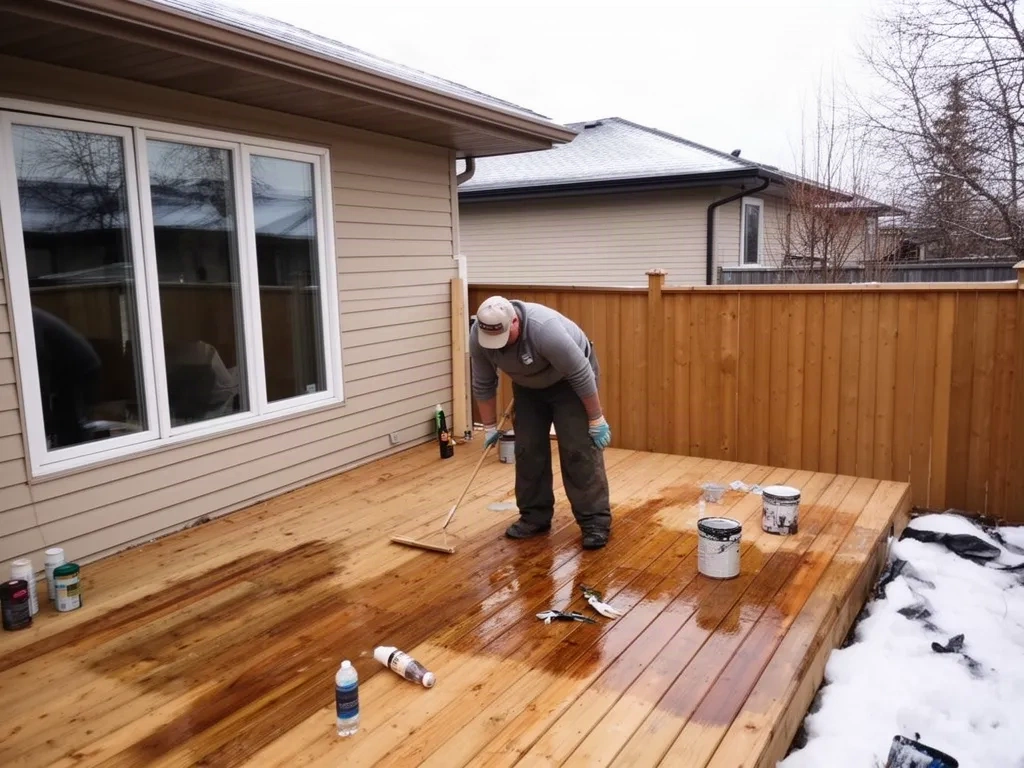
A spring deck maintenance checklist for Winnipeg homeowners covers four steps: inspect for freeze-thaw damage, clean and brighten the wood, sand or spot-repair problem areas, and reapply a penetrating stain before the summer UV hits.
The order matters. Skipping the inspection means you might seal over cracked boards that fail in June. Skipping the brightener means your new stain peels by August. And using the wrong stain, the film-forming kind sold at big-box stores, means you'll be back to sanding within 18 months, not 5 years. Here's the full checklist, built for the specific way Winnipeg winters beat up a deck.
Why Winnipeg Decks Need This Checklist Every Spring
No other Canadian city combines this exact set of stressors. Winnipeg gets deep freezes that drive frost into the soil, then sudden thaws that leave standing water on deck boards. The gumbo clay in most Winnipeg yards holds moisture against your posts and joists. Then summer arrives with UV intensity that bleaches cedar to grey in a single season.
That freeze-thaw cycle is the big one. Water seeps into end grain, freezes, expands, and opens the wood's pores. Over two or three winters, you get checking, cupping, and split boards. If you wait until the deck looks bad, you're already into restoration territory, sanding down to clean wood, replacing boards, and re-sealing everything. The checklist below catches problems before they compound.
Step 1: Inspect for Freeze-Thaw Damage (15 Minutes)
Walk the deck with a screwdriver or a stiff putty knife. You're looking for:
- Soft spots, press the blade into the board. If it sinks in, the wood is rotten.
- Split ends, check the ends of every board, especially where they meet the rim joist.
- Loose railings, grab the top rail and shake it. Winnipeg winds put serious load on railings.
- Rusting hardware, screws and nails that have popped up or rusted.
- Rot on posts, especially at ground level, where gumbo clay holds water against the wood.
If you find soft spots, mark them with chalk. They'll need replacing before staining. If you find loose railings, fix them before you even think about a coat of stain, a railing failure is a safety issue, not a cosmetic one.
Step 2: Clear Everything Off the Deck
Move furniture, planters, grills, and rugs. Sweep the surface. Pull weeds that have grown through the gaps between boards. This sounds obvious, but half the decks we quote in Winnipeg still have last year's patio furniture sitting on them, and the boards under those feet are always the worst, because moisture got trapped underneath.
Step 3: Clean the Deck, Not Just a Pressure Wash
A proper spring clean does two things: it removes the grey oxidation layer and it kills any mildew or algae that grew over winter. You need a deck brightener (oxalic acid-based) and a deck cleaner (sodium percarbonate-based). They do different things:
- Deck cleaner strips dirt, pollen, and mildew. It's the first pass.
- Deck brightener neutralizes the cleaner and restores the wood's natural colour. It also opens up the wood pores so the stain can penetrate.
Do not skip the brightener. If you just pressure-wash and stain, the wood's surface is still sealed with oxidation and the stain won't absorb properly. You'll get a blotchy finish that peels within a year.
Pressure washing tips: Use a wide fan tip (25 degrees or wider) and keep the wand moving. Hold it about 12 inches from the surface. Too close, and you'll gouge the cedar. Too far, and you'll just wet the wood. If you're not confident with a pressure washer, hire a pro, a bad wash can damage the wood worse than no wash at all.
Step 4: Sand and Repair (The Part Everyone Skips)
After cleaning and brightening, the deck needs to be dry, 24 to 48 hours depending on humidity. Then:
- Sand the entire surface with 60-80 grit to remove remaining oxidation and smooth out splinters.
- Sand the railings and balusters too, they get the most UV exposure and will show the most wear.
- Replace any damaged boards you found in Step 1.
- Fill cracks with a flexible wood filler designed for exterior use.
- Re-drive or replace any popped nails or screws.
This is the step that separates a deck-only crew from a general painter. A painter will pressure wash and spray a coat of stain. A deck specialist will sand, repair, and brighten first, because that's what makes the stain last.
Step 5: Choose the Right Stain, and Apply It Correctly
Winnipeg's climate kills film-forming stains. The cheap stuff from the big box store sits on the surface like paint, and when the freeze-thaw cycle hits it, it cracks and peels. You'll be back to sanding in a year.
Use a penetrating stain, specifically, a premium oil-based product like Sikkens or TWP. These soak into the wood rather than sitting on top. They flex with the wood as it expands and contracts, which is exactly what a Winnipeg winter demands. They also carry UV protection, which slows the greying process.
Application tips:
- Apply when the temperature is between 15°C and 25°C, not on a hot day, or the stain dries too fast and won't penetrate.
- Use a brush, not a sprayer. A brush works the stain into the grain. A sprayer just wets the surface.
- Two coats on the end grain, one on the face. End grain absorbs the most and needs the extra protection.
- Let it dry 48 hours before walking on it.
Step 6: The 10-Minute Maintenance Routine
Once the deck is sealed, the checklist isn't over. The routine for the rest of the season:
- Sweep weekly, leaves and pollen trap moisture.
- Move furniture every 2-3 weeks, so the boards underneath don't get trapped moisture.
- Rinse off bird droppings and sap, they can stain the wood over time.
- Do a quick visual check after each heavy rain, look for standing water on the boards.
When to Call a Pro vs. DIY
If your deck is in good shape, no rot, no split boards, no major grey, you can do the cleaning and brightening yourself in a weekend. That's the DIY path.
But if you've got any of the following, call a pro:
- Cracked or cupped boards that need replacing.
- Greyed wood that's been unprotected for 2+ years, it needs deep sanding, not just a brightener.
- Loose railings or posts.
- You don't own a pressure washer or have never used one safely.
We've restored decks that a homeowner tried to save with a pressure washer and a $40 can of stain. The fix costs more than the original job would have. If you're on the fence, get a quote and compare the cost to the risk of a DIY failure.
The Bottom Line
The spring deck maintenance checklist in Winnipeg is: inspect, clean, brighten, sand, repair, and stain with a penetrating product. Do it right and you'll get 4-6 years out of a coat. Do it wrong and you'll be re-sanding every spring.
We're a small crew that stains decks full-time, not painters who do the odd deck. We use premium penetrating stains (Sikkens, TWP) that flex with the prairie freeze-thaw cycle. We do the full prep: sanding, brightening, repairs, not just a coat of paint. If you're in Winnipeg or the surrounding bedroom communities and want it done right the first time, get a free quote within 48 hours, no pressure, just a straight answer on what your deck needs.