
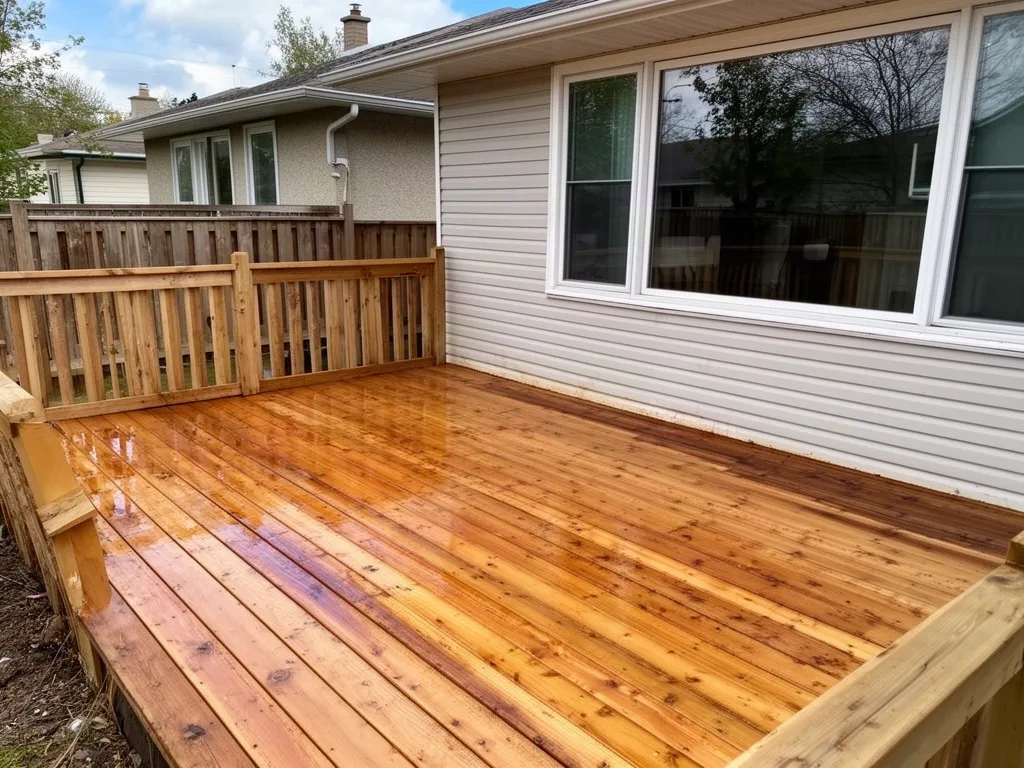
Your deck stain peels because the wood wasn't prepped properly, the wrong type of stain was used, or moisture trapped under the film expanded during Winnipeg's freeze-thaw cycles and pushed the coating right off the board. The fix is never another coat of stain, it's stripping the old finish, brightening the wood, and applying a penetrating stain that flexes with the wood instead of sitting on top of it like plastic.
Why Your Deck Stain Peels
Peeling is a prep failure, not a stain failure. what's actually happening on your deck.
Moisture trapped under the film. When a board gets wet and then gets sealed, the water has nowhere to go. When the temperature drops below freezing, that water expands and pushes the stain film off the wood. Winnipeg sees that freeze-thaw cycle dozens of times between November and March. One winter is enough to turn a small crack into a full sheet peel.
Film-forming stain in a climate that hates it. Film-forming stains, often labelled "deck and siding" or "opaque", sit on top of the wood like a layer of paint. They look great for a season, then the wood expands and contracts and the film can't keep up. It cracks, water gets under it, and the next freeze peels it off in sheets. Penetrating stains soak into the wood and move with it, so they don't peel.
Skipping the prep. You can't power wash a deck and expect stain to bond. Old oxidation, dirt, and pollen sit on the surface and block the new stain from soaking in. If the wood isn't sanded and brightened, you're painting over a layer of dust.
Cedar and gumbo clay. Cedar is naturally oily, if you don't brighten it with an oxalic acid wash, stain can't penetrate. And Winnipeg's gumbo clay soil holds water against your post bases and framing, keeping the wood damp far longer than in drier climates. That moisture has to go somewhere, and if it's trapped under a film, it goes up.
The Difference Between a Film and a Penetrating Stain
This is the biggest mistake we see on Winnipeg decks.
Film-forming stains are basically thin paint. They seal the surface, look great for a year, then crack and peel when the wood moves. Once they peel, you can't touch them up, the whole deck has to be stripped to bare wood.
Penetrating stains like Sikkens and TWP soak into the wood fibers and leave no film on the surface. They flex with the board through freeze-thaw cycles, they let moisture escape naturally, and they don't peel. They fade and wear over time, but they don't peel, and that's the difference between a deck that needs a maintenance coat in a few years and one that needs a full strip and redo.
How To Stop The Peeling
If your deck is already peeling, what has to happen:
1. Strip the old finish completely. You can't spot-fix a peeling deck. The entire old layer has to come off down to bare wood. A power washer with a surface cleaner lifts most of it, but sanding is what gets the wood clean and open-pored.
2. Brighten the wood. After stripping, the wood is gray and oxidized. An oxalic acid brightener removes that oxidation and opens the grain so the stain can actually penetrate. This is the step most DIYers skip, and it's the step that separates a 2-year finish from a 6-year finish.
3. Repair the structure. Loose boards, popped nails, and rot spots all need to be fixed before staining. Stain doesn't fix structure. If you stain over a damaged board, the repair shows through and the stain fails around it.
4. Apply a penetrating stain. Two coats of a premium penetrating stain, applied with a brush or roller so it works into the wood. No sprayers, a sprayer lays stain on the surface instead of pushing it into the grain.
5. Maintain it. A penetrating stain doesn't peel, but it does fade and wear. Plan a maintenance coat every 3 to 5 years depending on sun exposure. That's far cheaper than a full strip and re-stain.
What A Professional Restoration Includes
When we restore a deck in Winnipeg, here's exactly what happens:
- Inspection, we check for rot, loose boards, and fastener issues before we touch anything.
- Cleaning, a power wash with a surface cleaner removes dirt, mildew, and the top layer of old stain.
- Brightening, an oxalic acid wash neutralizes the wood and opens the grain.
- Sanding, we sand railings, boards, and any areas where the old stain is thick or damaged.
- Repairs, we replace or re-fasten damaged boards, countersink nails, and fill gaps.
- Staining, two coats of Sikkens or TWP, brushed in so the stain penetrates.
We don't do a one-coat spray job. A deck that gets the full prep takes longer, but it's the difference between a deck that looks good for one season and one that looks good for five.
What It Costs
Typical pricing for Winnipeg and the surrounding bedroom communities:
- Deck Staining & Sealing: $400–$1,500
- Deck Sanding & Restoration: $600–$2,000
- Deck Cleaning & Power Washing: $150–$400
- Fence Staining & Painting: $300–$1,200
The price depends on deck size, condition, and whether you need a full restoration (strip, sand, brighten, stain) or just a re-coat on a deck that's already in good shape.
Why Choose Deck Staining Winnipeg
We're a deck-only crew. We don't paint houses or wallpaper rooms, decks are all we do. That means we own the right tools, we know cedar and pressure-treated wood, and we've stained hundreds of decks that have survived Manitoba winters.
We use premium penetrating stains, Sikkens and TWP. They cost more than the $30-a-gallon stuff at the big box store, but they're the difference between a deck that peels in one year and a deck that still looks good after five.
And we do the full prep. We don't power-wash and slap a coat of stain on. We strip, brighten, sand, repair, and stain, the whole process that actually stops peeling.
Get Your Free Quote
If your deck is peeling, the worst thing you can do is cover it with another coat of stain. Book a free assessment, we'll come out, inspect the deck, and give you a fixed quote within 48 hours. No pressure, no upsell. Serving Winnipeg and the surrounding area.