
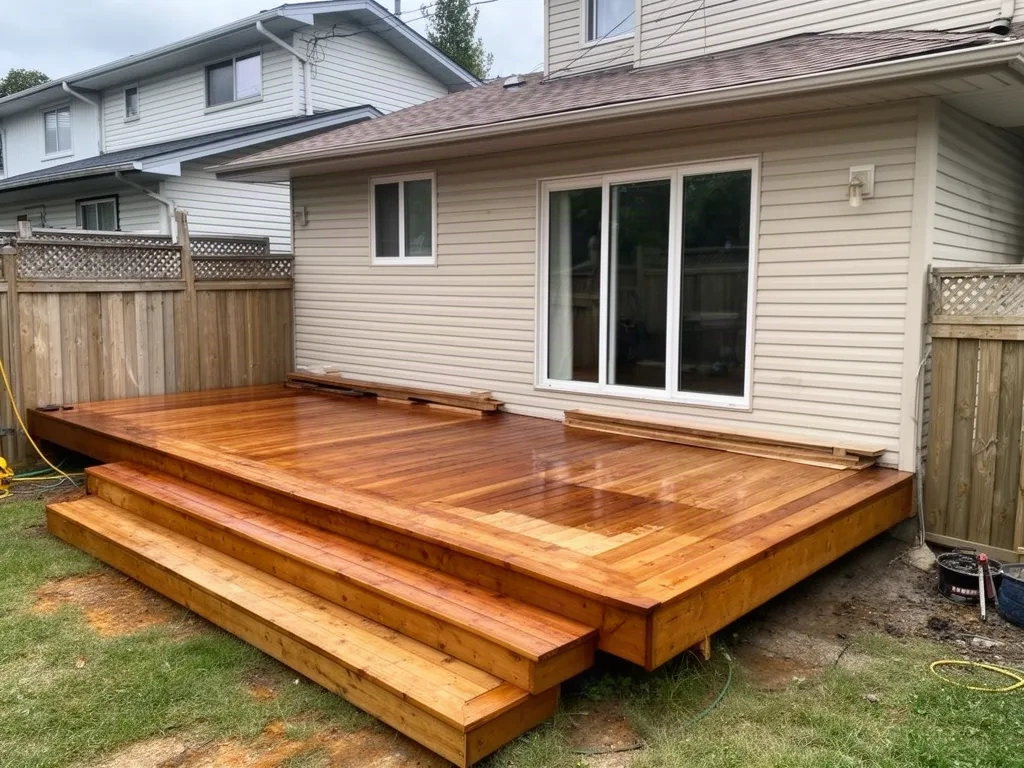
The best time to stain a fence in Winnipeg is before the wood gets a chance to go grey, typically in late spring (mid-May to late June) or early fall (mid-September to late October), when daytime temps sit between 15°C and 25°C, the wood is dry, and the forecast gives you at least 48 hours without rain. Do it right, with proper prep and a premium penetrating oil stain, and a cedar fence in this city can go five to seven years between coats. Do it cheap, or stain damp wood, and you'll be redoing it by next June.
Why Winnipeg fences fail faster than anywhere else
Your fence fights a three-front war every year. Winter brings freeze-thaw cycles that expand and contract the wood, splitting grain and popping nails. Spring turns gumbo clay into a mud that splashes up onto the lower boards and holds moisture against the wood all season. Summer hits with 35°C heat and harsh UV that bleaches the colour and dries out natural oils. A fence that lasts 10 years in a milder climate needs attention every 2–3 years here.
The fix isn't more stain. It's the right stain, applied to properly prepared wood, at the right time.
The truth about prep: it's 80% of the job
The biggest mistake we see on Winnipeg fences is someone rolling a fresh coat of stain over last year's grey, dirty, weathered wood. A penetrating oil stain needs to soak into open grain. If it hits a layer of grime, mildew, or an old film finish, it sits on the surface and peels off within a season.
Here's the prep sequence that actually works:
1. Clean. A pressure washer at 1,200–1,500 PSI (not the 2,500 PSI you'd use on a driveway, that will shred cedar) removes dirt, mildew, and loose fibres. Keep the nozzle 12–18 inches from the wood and work with the grain.
2. Brighten. A wood brightener (oxalic acid) neutralizes the surface oxidation that turns wood grey and opens the grain so the stain can penetrate. This is the step most homeowners skip, and it's the difference between a stain that lasts 5 years and one that lasts 2.
3. Dry. Cedar needs 48–72 hours of dry weather after washing before it will accept a stain. If the surface still feels damp to the touch, wait.
4. Repair. Replace split pickets, popped nails, or warped boards now. Staining over broken wood just hides the problem for a few months.
That's a lot of work. It's also why most DIY fence staining in Winnipeg ends up being a two-year project.
Choosing the right stain for a prairie climate
Skip the film-forming "deck paint" in a can. For Winnipeg's freeze-thaw cycles, you want a penetrating oil stain, like Sikkens or TWP, and here's why:
- It flexes. A film paint can't stretch when the wood expands and contracts through a Manitoba winter. It cracks, then it peels. A penetrating oil moves with the wood.
- It breathes. Fence boards get wet from rain and snow. A film stain traps that moisture inside, which leads to rot from the inside out. A penetrating oil lets the wood dry out naturally.
- It's repairable. When a penetrating stain finally wears thin, you just re-coat it. No stripping, no sanding, no old paint to fight.
Choose a semi-transparent stain if you want to see the cedar grain. Choose a solid stain if you want a clean, uniform colour and don't mind hiding the texture. Either way, make sure it's oil-based, not a water-based film.
When to stain your fence in Winnipeg
The window is narrower than you'd think:
- Late spring (mid-May to late June): The wood is still dry from the thaw, temperatures are moderate, and the UV hasn't had time to break down the surface. This is the best window for a freshly sanded or new fence.
- Early fall (mid-September to late September): The wood has dried out completely from the summer, and you're ahead of the fall rains. Just watch the forecast, you need 48 hours of dry, no rain.
- Avoid: July afternoons (the stain dries too fast and won't penetrate), and any time the wood is damp from rain or morning dew.
What it costs to stain a fence in Winnipeg
Typical pricing for a standard 6-foot cedar fence, 100–200 linear feet:
| Service | Typical range |
|---|---|
| Fence staining & painting | $300 – $1,200 |
| Fence cleaning & power washing | $150 – $400 |
| Fence sanding & restoration (with stain) | $600 – $2,000 |
The price gap between a $300 job and a $1,000 job is almost entirely prep. A $300 job is a quick wash and a single coat. A $1,000 job is a full clean, brighten, repair, and two coats of premium penetrating oil. On a fence that has to survive a Manitoba winter, that difference is the difference between 5 years of colour and 18 months of peeling.
Why Winnipeg homeowners choose Deck Staining Winnipeg
We're a deck-only crew, we don't paint houses, we don't do interior trim, and we don't treat fences as an afterthought. Fences and decks are all we do, all day, and that focus shows up in the details.
- Premium penetrating stains only. We use Sikkens and TWP, the same products specified for high-end commercial work, because they flex with the freeze-thaw cycle and actually last.
- Full prep, every time. We sand, brighten, and repair before we stain. We'll tell you if a board needs replacing before we start, so you're not paying to stain over a problem.
- Free quote within 48 hours. We'll come out, measure, look at the wood, and give you a clear number. No pressure, no "call us back to sell you something."
We serve Winnipeg and the surrounding bedroom communities, from St. Norbert to Charleswood to West St. Paul. If your fence is in the Perimeter, we'll come to you.
Ready to get your fence stained before the next freeze-thaw?
The cheapest time to protect a fence is before it starts showing wear. If your fence is looking grey, peeling, or just had a rough winter, get a quote now. We'll come out, look at the wood, and give you a straight answer on what it needs and what it'll cost, free, within 48 hours. Precision in every stroke, from the first wash to the final coat.